Governance Class 04
A BRIEF OVERVIEW OF THE PREVIOUS CLASS (05:01 PM)
WEAKNESS IN SECRETARIAT ADMINISTRATION (05:03 PM)
- During the British time, the administration performed regulatory functions like maintenance of law & order and generation of revenue.
- The size of the secretariat administration was also very small. It consisted of 17 Ministries. After Independence, India had opted for the welfare state. It led to rapid expansion in the size of Ministries and Departments. At present, there are around 57 Ministries and 93 Departments in the Government of India.
- A Ministry is headed by a Minister whereas a Department is headed by a civil servant of the rank of Secretary.
- A Ministry can have more than one department, for example- the Ministry of Home Affairs has a maximum number of Departments followed by the Ministry of Finance and other Ministries.
- Rapid expansion in the size of Ministries and departments is mostly due to political reasons. With the emergence of the Coalition government, political parties have been forced to expand the size of the secretariat administration to cater to the demands of the coalition partners. It led to unscientific divisions of work in the Secretariat administration.
- The 91st Constitutional Amendment Act has restricted the size of the Council of Ministers to 15% of the strength of the lower house of Parliament.
- Other major problems faced by the Secretariat administration in India
- Rapid expansion in the size of the Secretariat administration has not resulted in drastic improvement in the efficiency of administration.
- As pointed out by the Second Administrative Reforms Commission, there are 16 different Hierarchical levels in each Ministry. At all these levels the concerned officials have absolute discretionary powers. Decision-making within the government has become extremely slow.
- Red Tapism- Another major weakness of our secretariat administration is too much delay in the decision-making process due to unnecessary hierarchies.
- Secretariat administration is characterized by Top-heavy administration, There are 93 secretaries and almost 600 joint secretaries working in all Secretariat organizations. All of them are involved only in policy formulation, whereas at the district level, all these policies are expected to be implemented by one district collector.
- Secretariat administration is characterized by an Inverse pyramid wherein most experienced civil servants are involved in policy formulation at the top whereas less experienced IAS officers are made responsible for implementation.
- It led to a situation wherein India is considered a good country in terms of policy formulation but not so efficient in matters of policy implementation.
- India has only a Rank classification in its Civil services, Generalist civil servants would reach top-level positions in the Secretariat organizations. In the age of globalization, governance is becoming highly technical, and specialized in nature. These generalist civil servants could not live up to the expectations in a globalized world.
- Since promotions are mostly based on seniority, career advancement of civil servants has become completely politicized. Political executive rewards only those civil servants who are committed to the ideology of the ruling political party in power but not to the ideals of the constitution. It has impacted adversely the work culture of the secretariat administration.
- There is no accountability of administration which automatically results in inefficiency of Bureaucracy.
- Still Indian administration is characterized by high levels of secrecy including secretariat administration. It is resulting in a lot of scope for corruption and misuse of power.
SECRETARIAT ADMINISTRATION REFORMS (05:40 PM)
- As rightly pointed out by PM "Minimum Government and Maximum Governance" should be the ultimate objective of Secretariat administration in India.
- The Second Administrative Reform Commission suggested that the number of Ministries in the Government of India can not be more than 27.
- The ministries which perform similar functions should be merged to create a single ministry. Departments can be created within the Ministry to ensure better coordination.
- For example- in China, all infrastructure ministries are under a single head to ensure better coordination.
- No. of hierarchical levels in the Ministries must be reduced to 4 from the present 16 to reduce Red Tapism and time and cost overruns.
- The present administrative structure which is in the form of an Inverse pyramid can not be sustained in the long term. Experienced IAS officers should focus more on policy implementation at the Ground level whereas less no. of officers should be posted in secretariat organizations.
- Lateral entry should be encouraged in the secretariat organizations so that experts from different fields can be part of policy formulation in the age of Globalization.
- De-politicization of civil services - All career-related aspects of civil servants must be under the domain of the central civil services board consisting of senior civil servants.
- Implementation of E-governance to improve the efficiency of administration.
- Citizen charters should be made mandatory for all the Ministries and Departments to ensure the participation of Stakeholders in Governance.
- Effective implementation of Right to Information to ensure complete transparency in decision-making processes.
- A time limit should be fixed for Bureaucrats to make decisions on files to eliminate Red Tapism within secretariat administration.
RIGHT TO INFORMATION (06:05 PM)
- Representative democracy and colonial bureaucracy have made sure that there is very little scope for citizen participation in Governance.
- The present Indian administration is still characterized by colonial features only which include -
- a) Centralization of power.
- b) High levels of secrecy.
- c) Huge amount of Discretionary powers.
- d) Complete absence of citizen participation in governance.
- e) Absolute monopoly of the state over resource allocation.
- f) Complete absence of accountability and Grievance Redressal mechanism.
- Good governance is possible only when the administration is Transparent, Accountable, Participatory, and Efficient in nature.
CONCEPT OF RTI (06:54 PM)
- As rightly pointed out by the second ARC in its report on RTI, RTI is the master key to the locks of good governance.
- When there is transparency in an administration people realize that there are very few opportunities for them to participate in governance, and they will demand more participation in governance. Similarly, they will also demand consensus in policy formulation.
- They will also look for accountability from their administration as they realize that there is no accountability within the administration.
- Ultimately all other objectives of good governance can be realised only with complete transparency in administration.
-
Transparency - People will demand
- Accountability
- Consensus-driven policy
- Participation
- People will come to know that
- There is no Rule of law
- It is not efficient and effective
- It is not equitable and inclusive
- It is not responsive
- "We can easily forgive a child who is afraid of the dark; the real tragedy of life is when men are afraid of the light"- The government bureaucrats hiding behind the veil of secrecy and not allowing transparency.
- RTI is an Ordinary legal Act [* It means- It is a temporary Act, It is enacted by Parliament, No constitutional Amendment is required, and Follows due process of law. ].
-
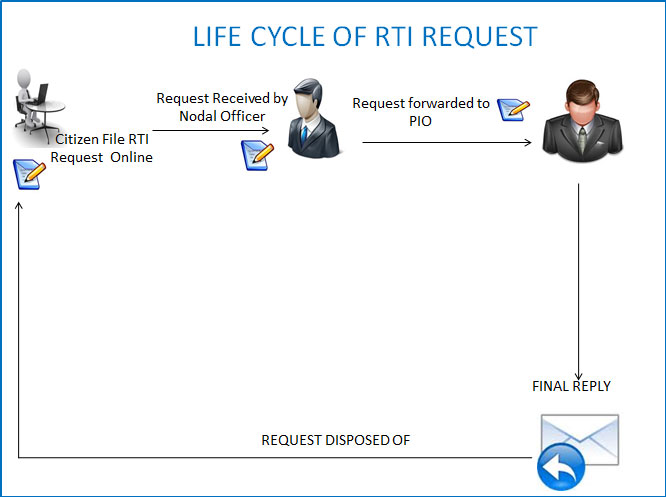
PROBLEMS IN IMPLEMENTATION OF RTI (07:27 PM)
- 1st Problem- Official Secrets Act- Can good and bad go together?
- As per the 2nd ARC, the objective of RTI is to ensure complete transparency. [* Official Secrets Act was passed by the British administration. During that time, Indians were allowed in the administration through transferred subjects. British worried that Indians would know about the administration, so this Act was passed. ]
- Any information can be categorized as secretive information by the Government.
- These secret documents can not be used as evidence in a court of law.
- The Official Secrets Act promotes "Culture of Secrecy"
- 2nd ARC Suggestions
- It recommended abolishing the Official Secrets Act
- It recommended enacting the National Security Act- As all information can not be made public. Top secret information also can be made public after 30 years.
- Problem 2- Information commissions
- Regulatory Authorities have become parking lots for retired bureaucrats. They become members of information commissions after retirement.
- They have spent their entire lifetime only hiding information from the people. Their credibility can be questioned as well as their impartial functioning.
- More than 3 lakh cases are pending in Information commissions.
- The Information Commission does not have sufficient powers.
- In 85% of the cases, the fines were not paid.
- The judgment of CIC is not taken seriously.
- 2nd ARC Suggestions
- 2nd ARC recommended changes to Sec 11 and 12 of RTI.
- At least half the members of RTI should be from non-civil services backgrounds.
- At least 50% of members should be from those NGOs and CSOs that are working in the field of RTI.
THE TOPIC FOR THE NEXT CLASS:- RTI- PROBLEMS, SUGGESTIONS ETC.